
Looking beyond conventional mooring choices
New insights into mooring system design for floating wind
Designing a floating offshore system requires countless decisions.
A new research study compares steel wire ropes, polyester ropes and hybrid configurations across multiple floating wind concepts and environmental conditions, providing valuable insights into their technical and economic performance.
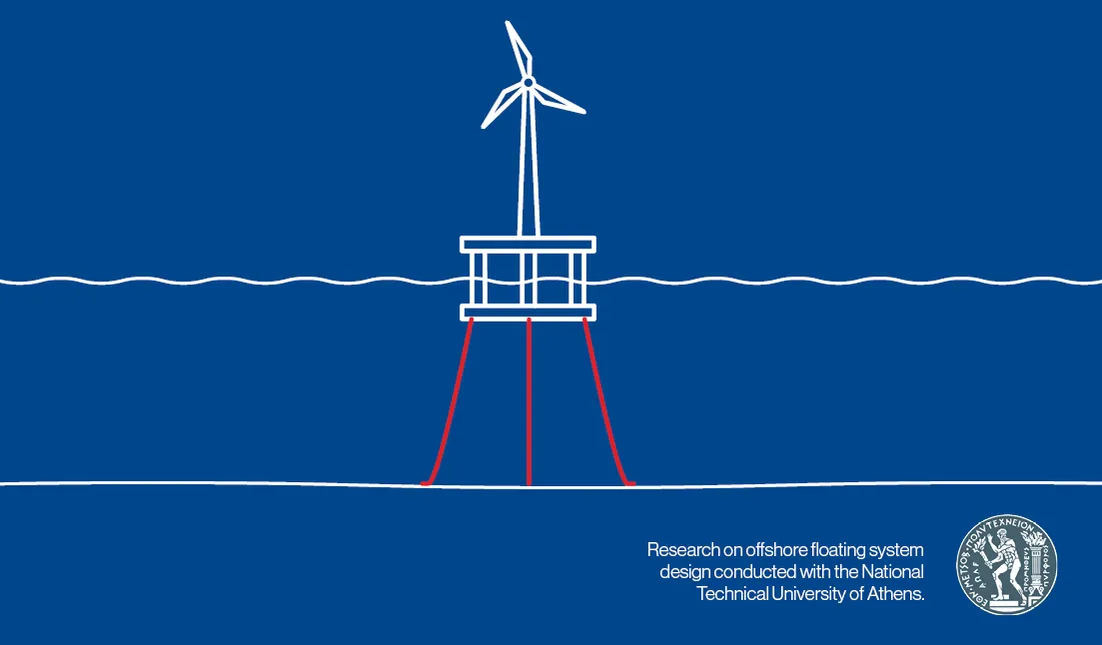
Why this research matters
The rapid growth of floating wind is pushing engineers to optimize mooring systems for increasingly demanding environments.
The challenge is not simply choosing a rope: is understanding how different mooring concepts perform across water depth, floater type, environmental conditions, cost targets and long-term performance
This study investigates and compares alternative mooring configurations in both shallow-water and deep-water scenarios using advanced coupled dynamic simulations.
What will you discover?
Key findings include:
Station keeping performance
Steel wire rope configurations demonstrate the same platform offset and station-keeping capability of those based on synthetic ones
Cost optimization
Material costs impacted by the floater designs and water depths and negligibly by the rope materials
No one-size-fits-all solution
The optimal mooring system depends on project-specific requirements.
Meet the expert
Maurizio Meleddu
With extensive expertise in wire rope engineering and offshore applications, Maurizio is the CTO of Teufelberger-Redaelli and leads innovation and research activities aimed at advancing mooring technologies for the floating energy sector.


Visit Us at FER Forum 2026
Interested in discussing offshore mooring systems, floating wind challenges or the study findings? Meet our team and explore the data behind the research.
Reserve your seat Friday, 23rd October h 13:30